

Heat Pump Tumble Dryers
The tumble dryers of a heat pump make use of hot air to dry your clothing, instead of letting it out into the outdoors. This is a cost-effective option for your family, since it helps conserve energy.
John Lewis offers a wide range of tumble dryers. These include both heat pump and vented models. Find out more in our guide to tumble dryers.
Cost
Tumble dryers are excellent for eliminating the need to hang laundry outside in the sun and to save space for storage, but they are prone to using a lot of energy. When looking to reduce your energy consumption, it may be worth looking into the use of a heat pump tumbler. They are more expensive at first, but they will save you money over time because of their lower energy consumption.
Heat pump tumble dryers work by reheating the air that was already warmed during the drying cycle, which results in significantly lower energy costs than condenser models vented or vented. This type of tumble-dryer uses half the electricity as condenser or vented models, which can save you up to PS173 on your utility bills each year.
When comparing the performance of heat pump tumble dryers to other models, there is typically a minimal price difference. But, it's important to consider the amount of energy is being used and how frequently you'll be using your tumble dryer. It is important to take into account the wattage of the machine as well as your electricity rate, which will influence the amount you pay for each tumble dry.
Vented tumble dryers are more expensive when you're on a tight budget. They make use of gas to dry your laundry, and they are powered by mains gas. They are also more limited in their locations of installation because they need to be placed in an area with adequate ventilation to get rid of the humid air.
Condenser dryers take moisture out of the laundry by transferring hot air into a separate condensing unit, which is then converted into water. The water can be drained into a removable container which must be manually emptyed or transferred into your drainage system to eliminate it continuously. This gives you more flexibility in the installation locations, but you will have to be prepared for any additional maintenance by ensuring that the drain pipe is in good working order.
Energy efficiency
If you're worried about your energy bills, a tumbler heat pump could provide substantial savings. The technology uses less electrical power to warm the air inside the tumble dryer, allowing it to dry your clothes faster and at lower temperatures than vented models.
The dryers also utilize an aerator to liquefy the humidity in the air and then discharge it through the condenser. This means they use less electricity than the traditional vented dryers. The dryers might take a bit longer to finish your laundry cycle as compared to vented models, but your clothes will feel and look better for longer because of the lower temperatures.
Typically they'll cost you between $500 and $700 more upfront than condenser dryers. However, this additional cost is offset by the savings you'll make on your energy bills over the long haul. They also cost more and require adequate ventilation.
Gas Safe engineers are required to install tumble dryers, similar to any other electrical appliance. A vented dryer requires an elongated, flexible vent hose that is permanently connected the appliance at one end and a drainage point at the other - a drain or window. The hose needs to be secured and can't be shared with any other appliance or used in any manner that could cause it to degrade.
Like heat pump dryers, a condenser dryer works by heating the air by using an electrical element before expelling the moisture through the condensation tray. They tend to be heavy-duty performers with larger capacity for wet loads ranging between 6 and 10kg. They also are more quiet to operate. However, they're more costly than heat pump tumble dryers and aren't suitable for installations without an unbreakable connection to the wall. They're also more expensive to operate than heat pump dryers since they require a lot of heat to evaporate the moisture from your laundry. Additionally, they aren't as efficient as vented models. They still rely on electricity to turn the motor that rotates your laundry.
Noise
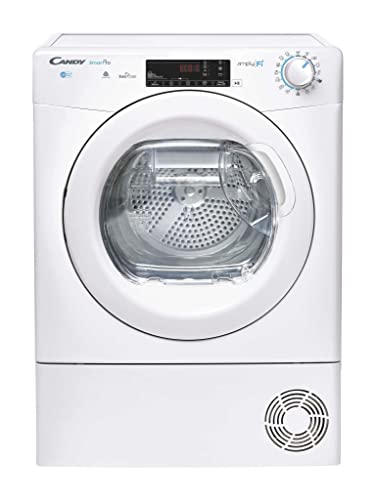
Tumble dryers produce plenty of noise however, how loud they are is contingent on a variety of variables. The decibel rating will only be one of many factors. The frequency of the sound can also impact the volume at which it sounds. The sound may be amplified if there are resonant items nearby like cabinets, work surfaces or furniture. It may also be affected by a room's acoustics. The sound from your tumble dryer may be muffled by carpets or other absorbent materials for acoustics.
Condenser and heat pump dryers are quieter than vented models, but it's important to remember that they're still loud. They are gentler on fabrics and dry your laundry more slowly due to lower temperatures of air. They also have a longer cycle. This means they're less damaging to your clothes and are less likely to cause loss of colour that's often caused by high temperatures old-fashioned tumble dryers.
If you plan to utilize your tumble dryer together with a washing machine, it's important to remember that both appliances need to be placed in close proximity to each other to prevent noise and vibrations during operation. To avoid this problem there is the washer and dryer stacking set is available for both kinds of appliances.
A tumbler with a heat pump needs to have an ongoing flow of air to operate, so it is best to place it in a well-ventilated area in your home. The vent hose needs to be connected permanently to the appliance, and positioned securely outside of your home.
The condenser tumble dryer, in contrast, does not require an ongoing connection to a vent, and can be placed anywhere in your home. It collects the leftover vapour and water in a container that can either be manually empty, or connected to a drain via an drainage tube, which will automatically empty it.
Converting what google did to me vented tumble-dryer to a condenser dryer is possible by using a conversion kit. However, it will affect the warranty provided by the manufacturer and should only be done by a certified professional. The kits come with components to set up a vent, as well an in-built pump to remove condensation.
Maintenance
A tumbler with a heat pump is different from condenser or vented models since it doesn't require external venting to draw out the hot air. Instead the warm air that passes through your clothes is collected and absorbed inside the appliance itself and then it is pushed through a condenser in order to separate the water from the hot air and then store it in a water tank (sometimes called a reservoir) inside the machine. It is necessary empty the tank eventually however, you can keep the dryer in the same space like if you had vents.
In comparison to vented models the heat pump model consumes around 50 percent less energy. This makes it cheaper to run, allowing you to save around PS42-PS51 per year according to Which?, and it's also much more sustainable for the environment. It's a cheap tumble dryer to purchase, and you should be sure to budget the initial costs.
A tumbler with a heat pump requires minimal maintenance, aside from cleaning the lint filter and checking for a buildup of dust on the heating unit every now and then. You'll have to clean your drains of condensation more frequently and it takes longer to dry clothes than dryers with vented vents.
Think about a sensor-controlled tumbler If you're looking for an affordable model. It will shut down the machine automatically after your laundry is done to prevent over-drying and damaging your clothes. You'll need to manually programme your dryer's drying process in case you have a lot of different fabrics.
Brands such as Beko and John Lewis offer tumble dryers that use condenser, heat pump or vented technology. All models come with a 2-year warranty, and John Lewis has excellent customer reviews and free delivery to homes. Make sure you read the warranty information prior to purchasing an appliance, particularly one that is electrical like a tumble dryer. This will ensure that you are covered in the event of a fault or breakdown.